We’ve visited quite a few aquariums over the years and the National Aquarium in Baltimore is definitely one of the better ones we’ve seen. Located right along Baltimore’s Inner Harbor, the aquarium is a pretty impressive place, not only for its exhibits but also for the design of the building itself. I didn’t realize until looking into its history that the aquarium actually played a major role in the redevelopment of Baltimore’s waterfront.
The idea for the aquarium came about in the 1970s when Baltimore was looking for ways to revitalize its Inner Harbor, which at the time was largely occupied by old warehouses and industrial buildings. Construction began in 1978, and in 1979 Congress granted the project national status. The aquarium officially opened on August 8, 1981, and became one of the main attractions that helped transform the area into the popular waterfront destination it is today. In its first year alone, it welcomed approximately 1.4 million visitors! That’s pretty impressive considering the original projections were only around 650,000 visitors annually.
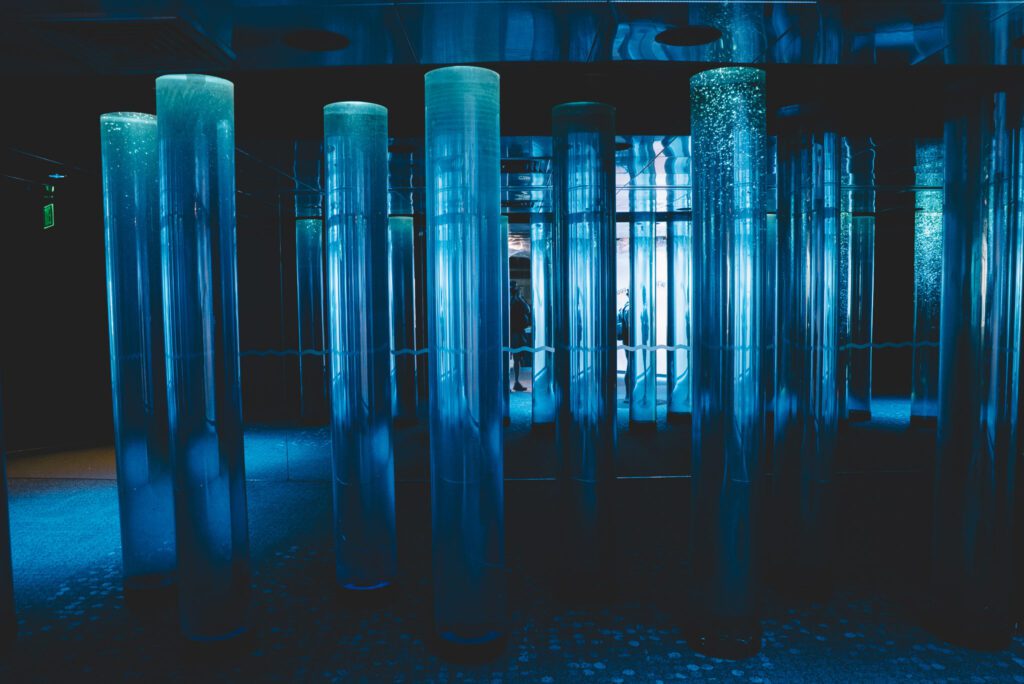
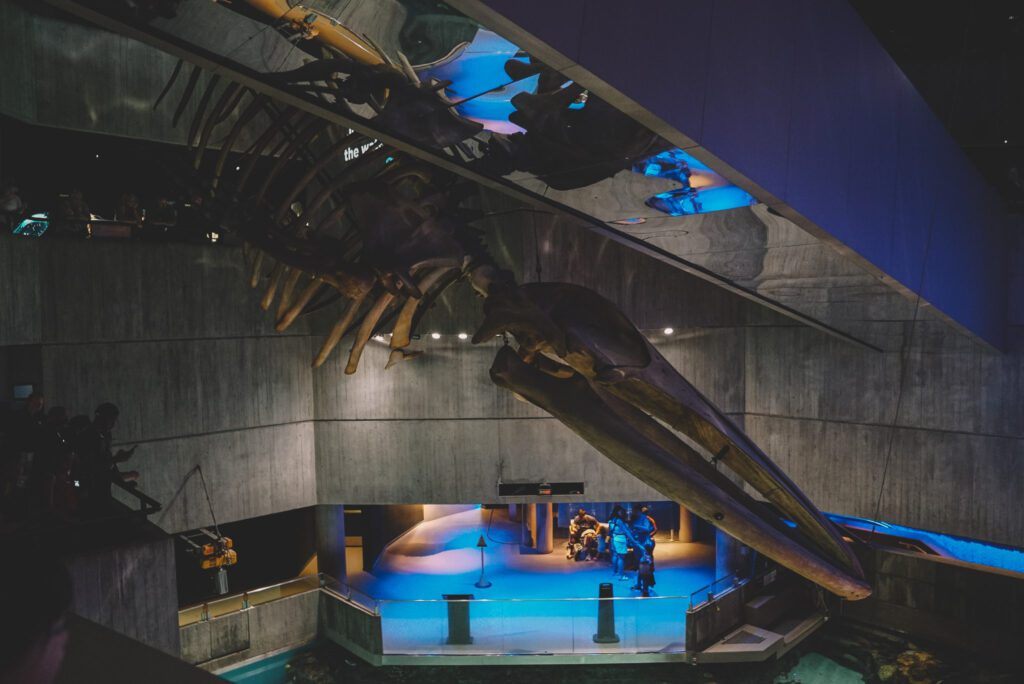
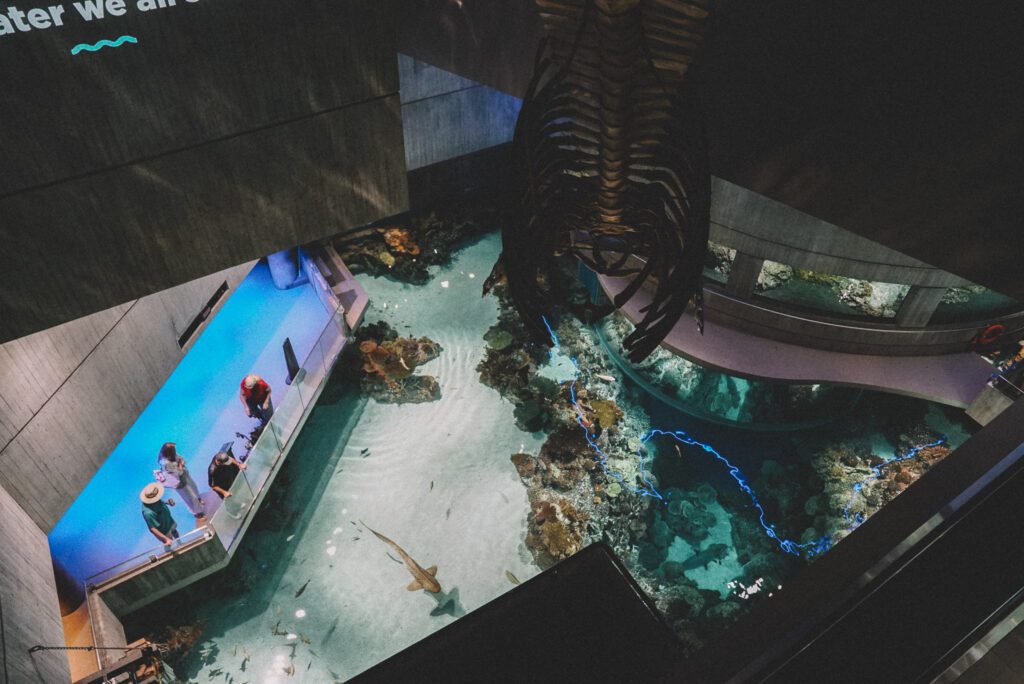
The building was designed by architect Peter Chermayeff and features several levels connected by ramps and walkways. What I liked about the design was how you could see some of the larger exhibits from different floors as you made your way through the building. There are also some neat architectural features throughout, including the illuminated bubble columns and the enormous whale skeleton suspended above the central exhibit. It’s definitely not your typical aquarium layout.
Bubble Tubes
Whale Skeleton
Top Down
One of the more interesting features of the aquarium is the large central habitat that can be viewed from several different levels. The photo above shows the view from one of the upper walkways looking down into the water. It’s a pretty neat perspective, especially with the whale skeleton suspended overhead and the sharks and rays swimming below.
The habitat is called Blacktip Reef and was opened in 2013 after the aquarium redesigned its original central exhibit. It’s modeled after an Indo-Pacific coral reef ecosystem and contains a variety of fish, sharks, rays, and other marine animals. The designers did a great job recreating the appearance of a natural reef, complete with rock formations and coral structures.
I liked how the aquarium allows visitors to observe the same habitat from different viewpoints. From above, you can see the movement of the animals and how they interact with their surroundings. As you continue through the building, you eventually get a closer view from the underwater observation areas.
For the kids, it was a great opportunity to see how different species share the same environment. It’s one thing to read about marine ecosystems in a book, but being able to see these animals swimming around in front of you makes the lesson much more interesting. This is one of the reasons we enjoy incorporating trips like this into our homeschooling curriculum.
Hands - On
One thing I always appreciate about museums and aquariums is when they have exhibits that allow children to interact with what they’re learning. The National Aquarium has several areas designed specifically for that purpose, including the Living Seashore exhibit which opened in 2015.
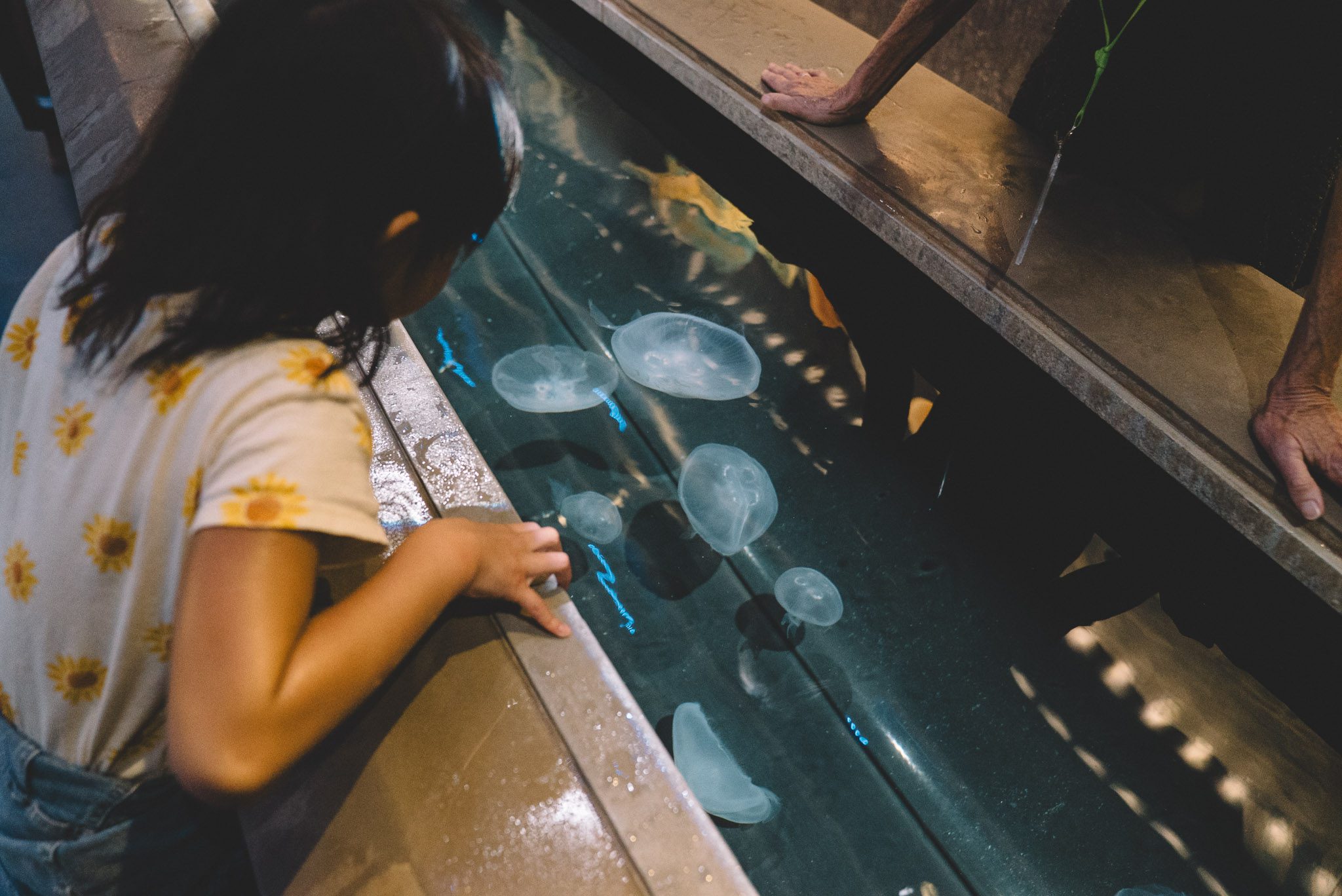
This exhibit focuses on the marine life found along the Mid-Atlantic coastline and includes touch pools where visitors can get close to animals such as horseshoe crabs, stingrays, and even moon jellies. With guidance from the aquarium staff, children can learn about these animals and how to interact with them safely.
The next photo shows one of our daughters observing the animals in the water. I think these are some of the better learning opportunities for young children because they’re naturally curious about everything. Being able to see an animal up close and observe the way it moves makes it much easier to understand than simply looking at a picture in a textbook.
It’s also a good way to introduce the importance of respecting wildlife and understanding why these animals need to be protected in their natural habitats.
Exhibits
The aquarium has a pretty large collection of exhibits representing different aquatic environments from around the world. Some focus on freshwater ecosystems while others recreate the conditions found in coral reefs, coastal waters, and tropical rainforests.
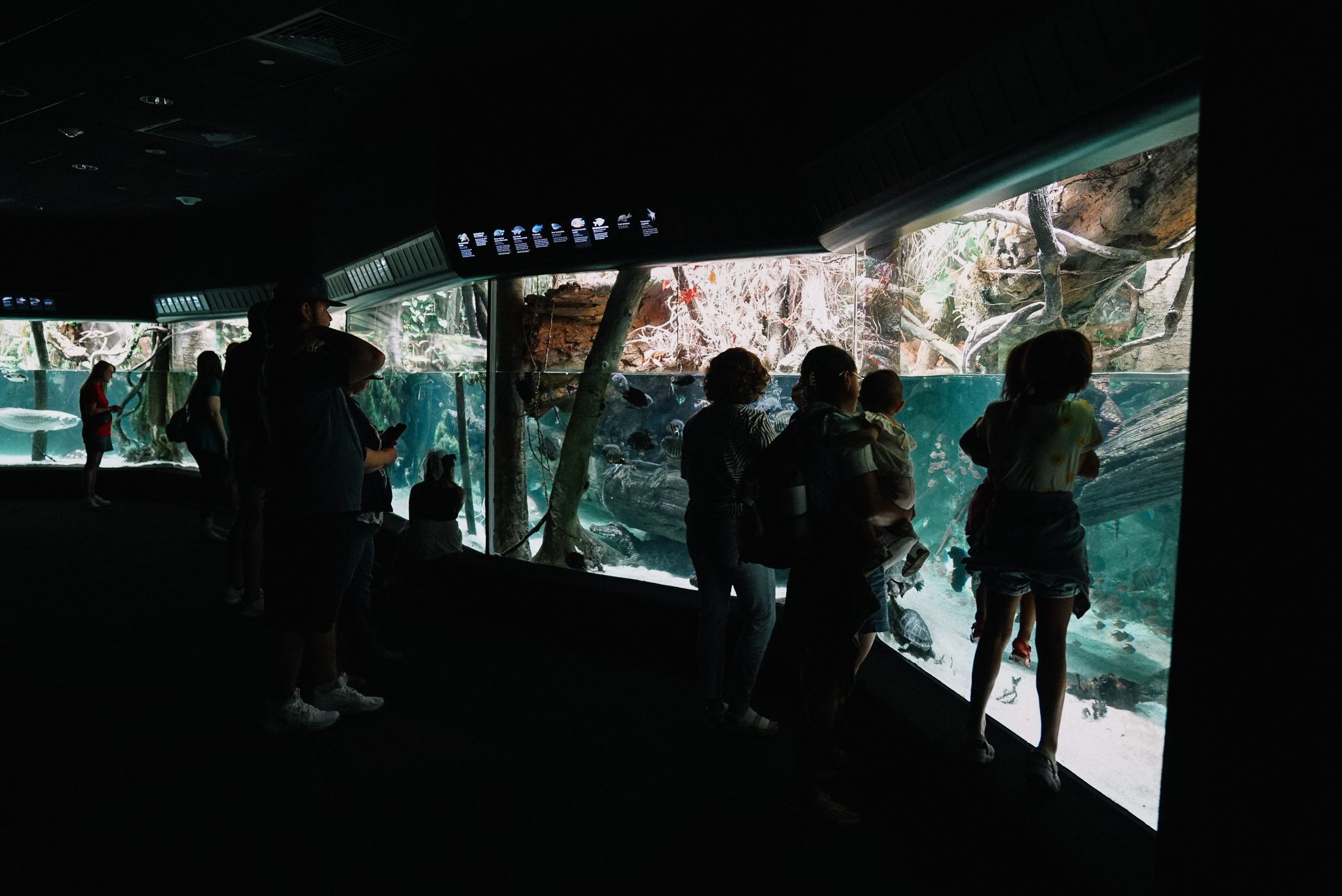
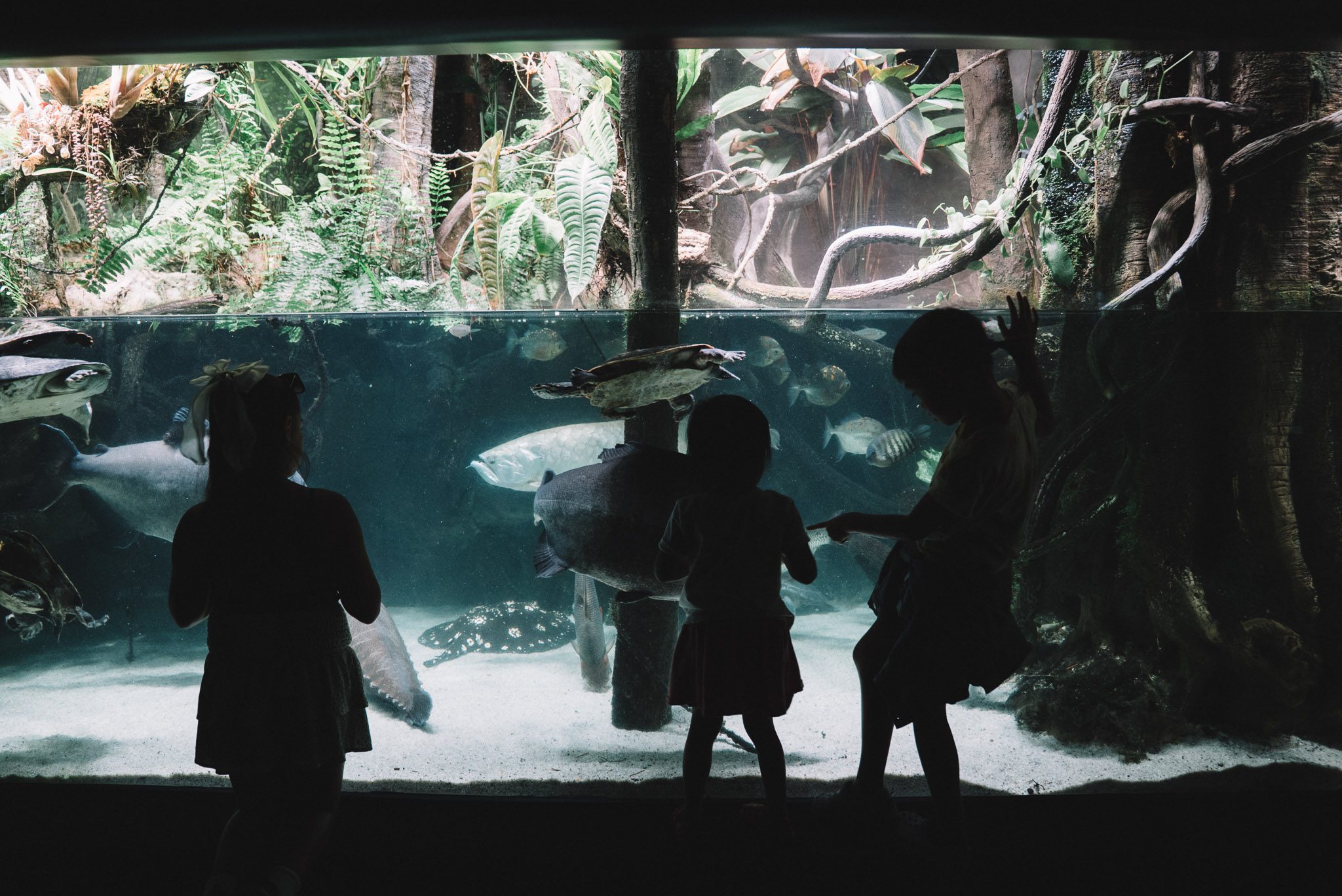
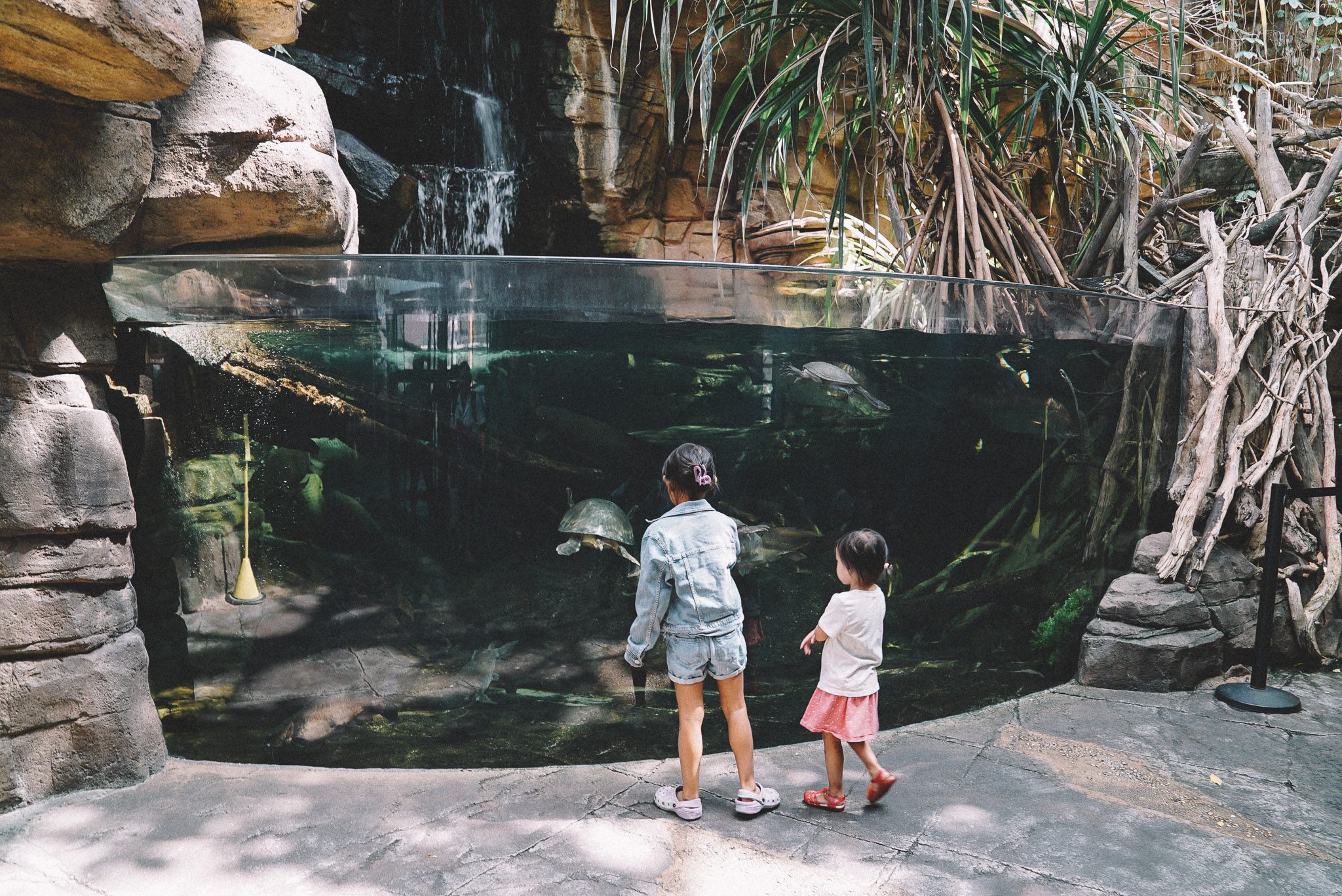
The Amazon River Forest was particularly interesting because it demonstrates how the seasonal flooding of the Amazon affects the surrounding environment. During the rainy season, large portions of the forest become submerged, allowing fish and other aquatic animals to move through areas that would normally be dry land.
The kids enjoyed observing the turtles and the different species of fish swimming around the submerged branches and vegetation. I thought this was a neat way of showing how water plays such an important role in shaping an ecosystem.
Amazon Aquatic Biodiversity
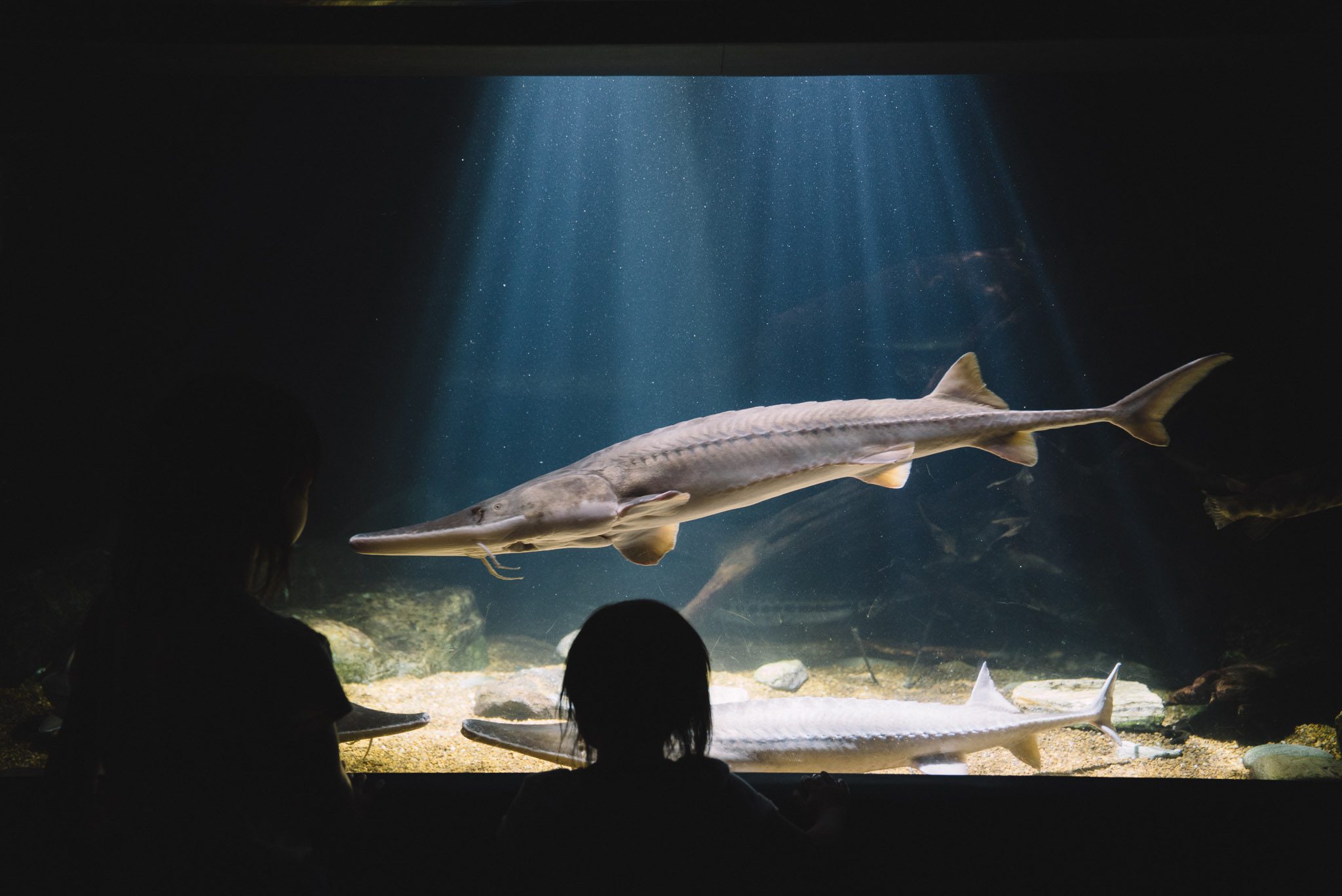
Sturgeon
Colorful Views
The next set of photos shows some of the more interesting marine animals we encountered during our visit. One of them was the sturgeon, which has a very unique appearance compared to most fish. Sturgeons belong to an ancient group of fish that have existed for millions of years. Their elongated bodies and bony plates almost make them look prehistoric.
Then there were the colorful reef fish, which were probably some of my favorite subjects to photograph. The contrast between the bright colors of the fish and the darker underwater environments made for some really nice photos.
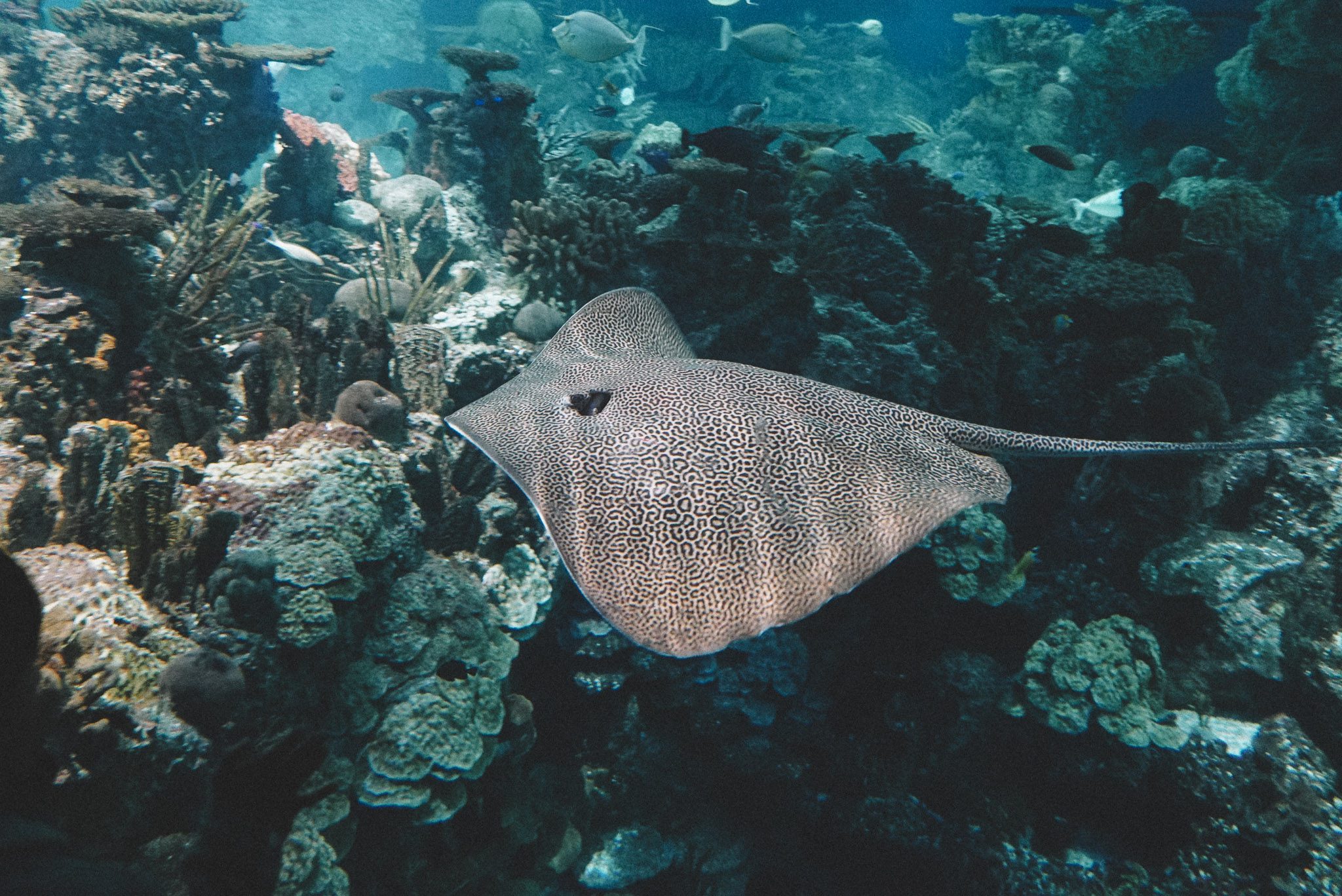
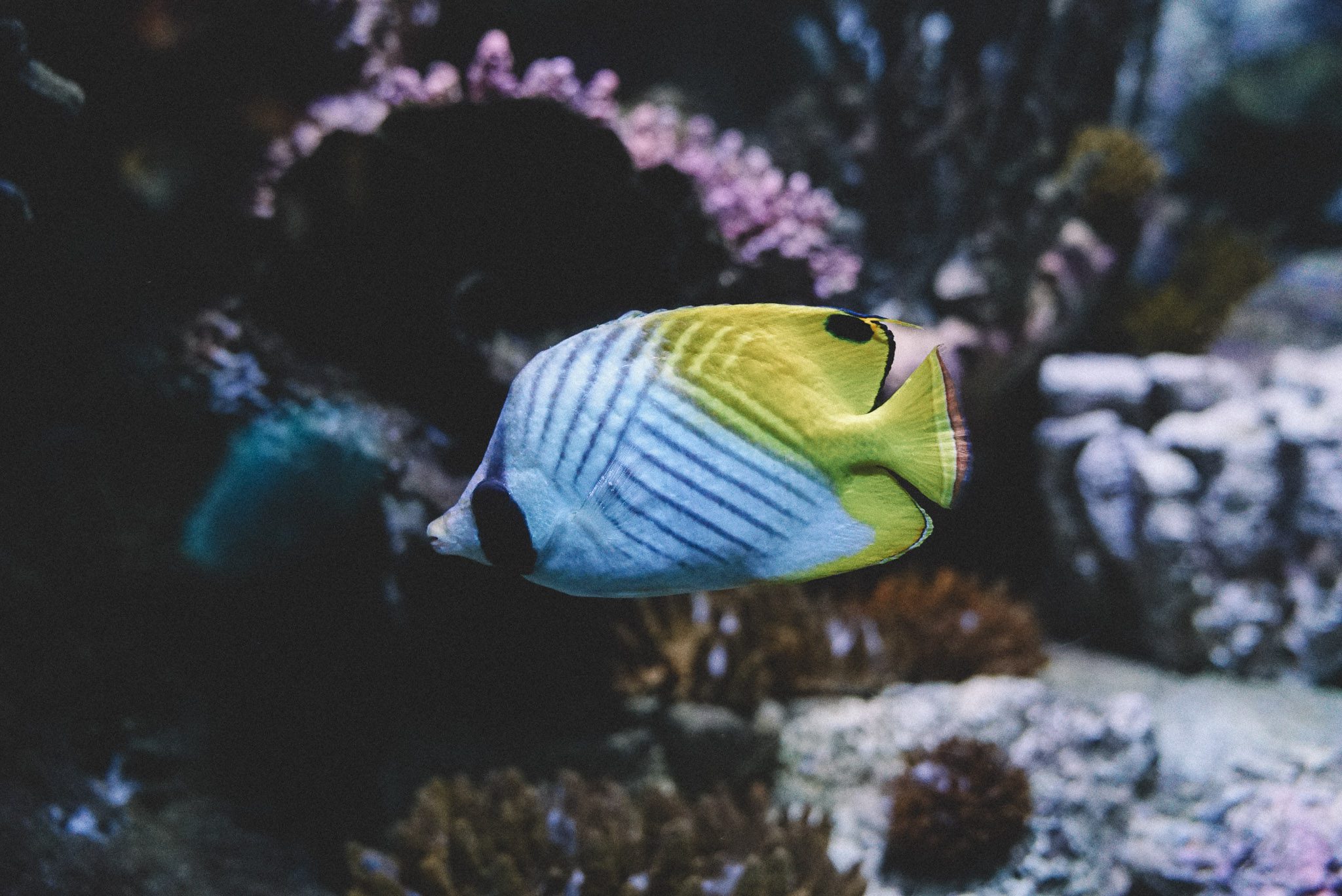
I particularly liked the leopard whipray with its intricate spotted pattern and the auriga butterflyfish with its yellow, white, and black markings. It’s amazing how much variety there is in the ocean, even among animals that share similar habitats.
Of course, taking photos through aquarium glass can be a little challenging with all the reflections and low lighting. But I think some of the shots turned out pretty well.
Noooo, This Is Patrick!!!!
Leopard Whipray
Auriga Butterflyfish (Threadfin Butterflyfish)
Break Time
After spending a good amount of time exploring the exhibits, we decided to take a break and get something to eat. When you’re visiting places like this with young children, taking breaks is almost a necessity. Especially when you have a baby with you and everyone seems to get hungry at different times!
Fortunately, the aquarium has several areas where visitors can sit down and enjoy a meal. We found a nice spot near the windows overlooking Baltimore’s Inner Harbor. The large windows provided plenty of natural light and offered a great view of the waterfront and surrounding buildings.
It was a good opportunity for everyone to sit down, eat, and recharge before continuing with the rest of the tour. The kids were happy to have something to eat, and I was happy to have a few minutes to rest my feet. Of course, I still managed to take a few photos during our break.
Sometimes these little breaks end up being some of my favorite family photos from the day.
Harbor View Observatory
Plenty of Seats
One of the things I liked about this particular seating area was how spacious it felt. There were plenty of tables and chairs available, and the large windows offered a nice panoramic view of the Inner Harbor. It’s actually a pretty good place to appreciate the waterfront and the surrounding architecture.
What’s interesting is that much of the area visible through those windows was part of the same redevelopment effort that brought the aquarium to Baltimore in the first place. Before the 1980s, the Inner Harbor looked very different from what visitors see today.
The aquarium has become such an important landmark that it’s difficult to imagine the waterfront without it. I think the decision to build it in this location was a good one, especially considering how it helped bring people back to the area.
Satisfied Stomachs
Shark Exhibit
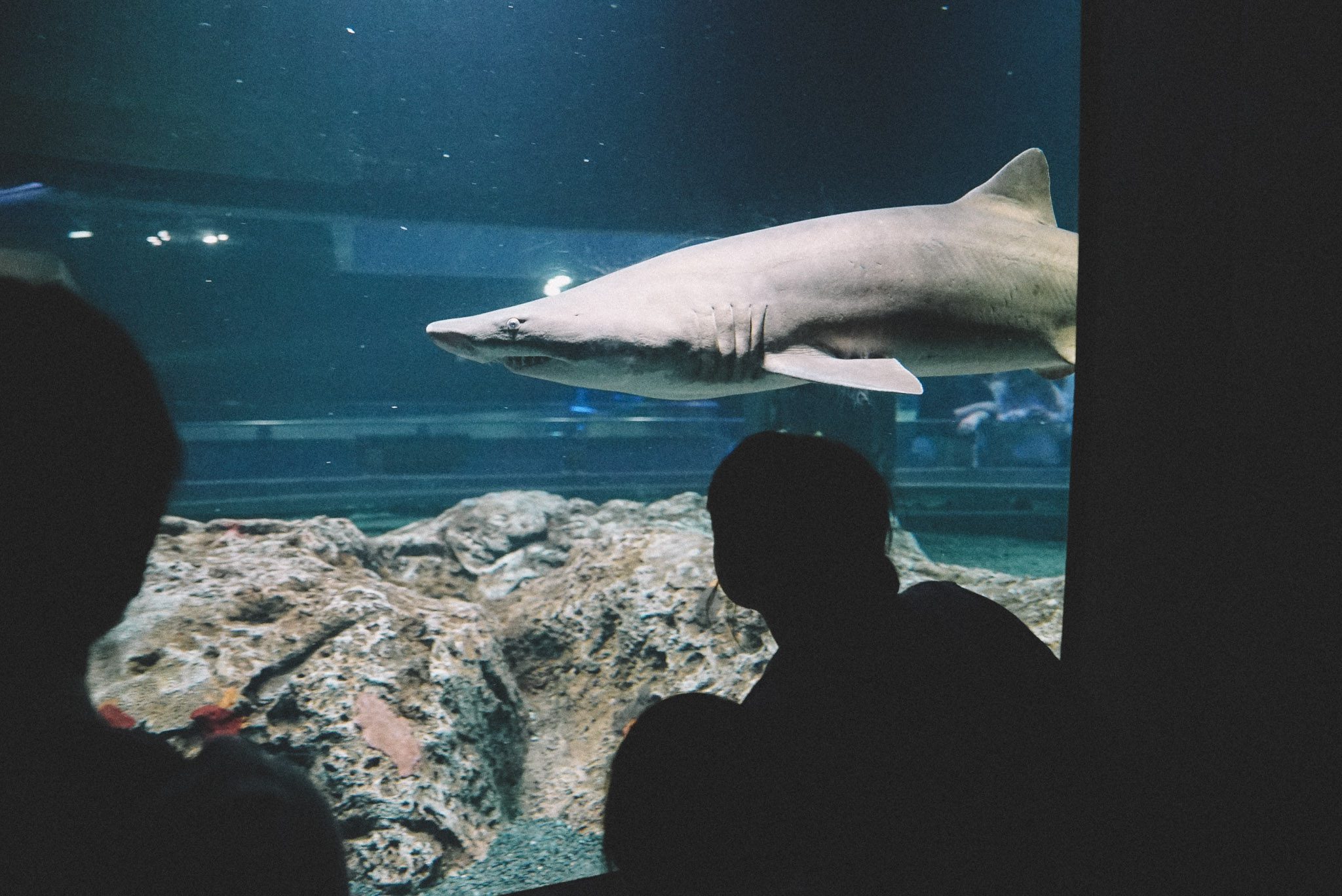
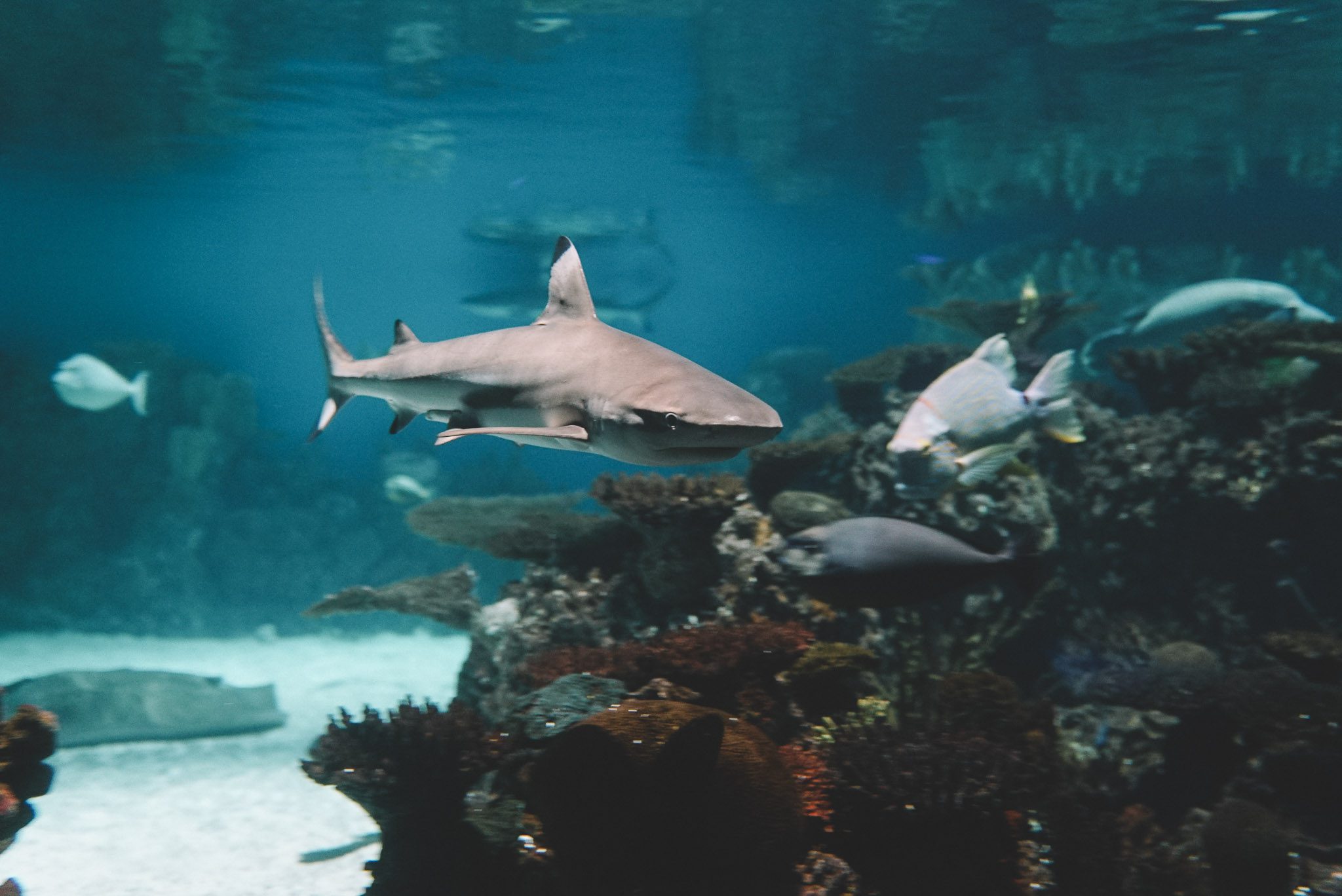
Another highlight of our visit was the shark exhibit. I’ve always found sharks fascinating, especially when you get the opportunity to observe them up close. There’s something about their size and the way they move through the water that makes them interesting to watch.
The aquarium has an exhibit called Shark Alley, which allows visitors to descend through a large circular habitat while observing several species of sharks. Some of them swim remarkably close to the viewing windows, giving you a good opportunity to appreciate their size and physical characteristics.
The aquarium’s shark habitats have undergone several major renovations since the original facility opened in 1981. One of the larger renovations took place during the 1990s as the aquarium continued improving its exhibits.
For our homeschool lessons, this was another good opportunity to discuss marine predators and their role in maintaining healthy ocean ecosystems. Sharks often have a bad reputation, but they’re actually an important part of the ocean’s food chain.
Vivariums
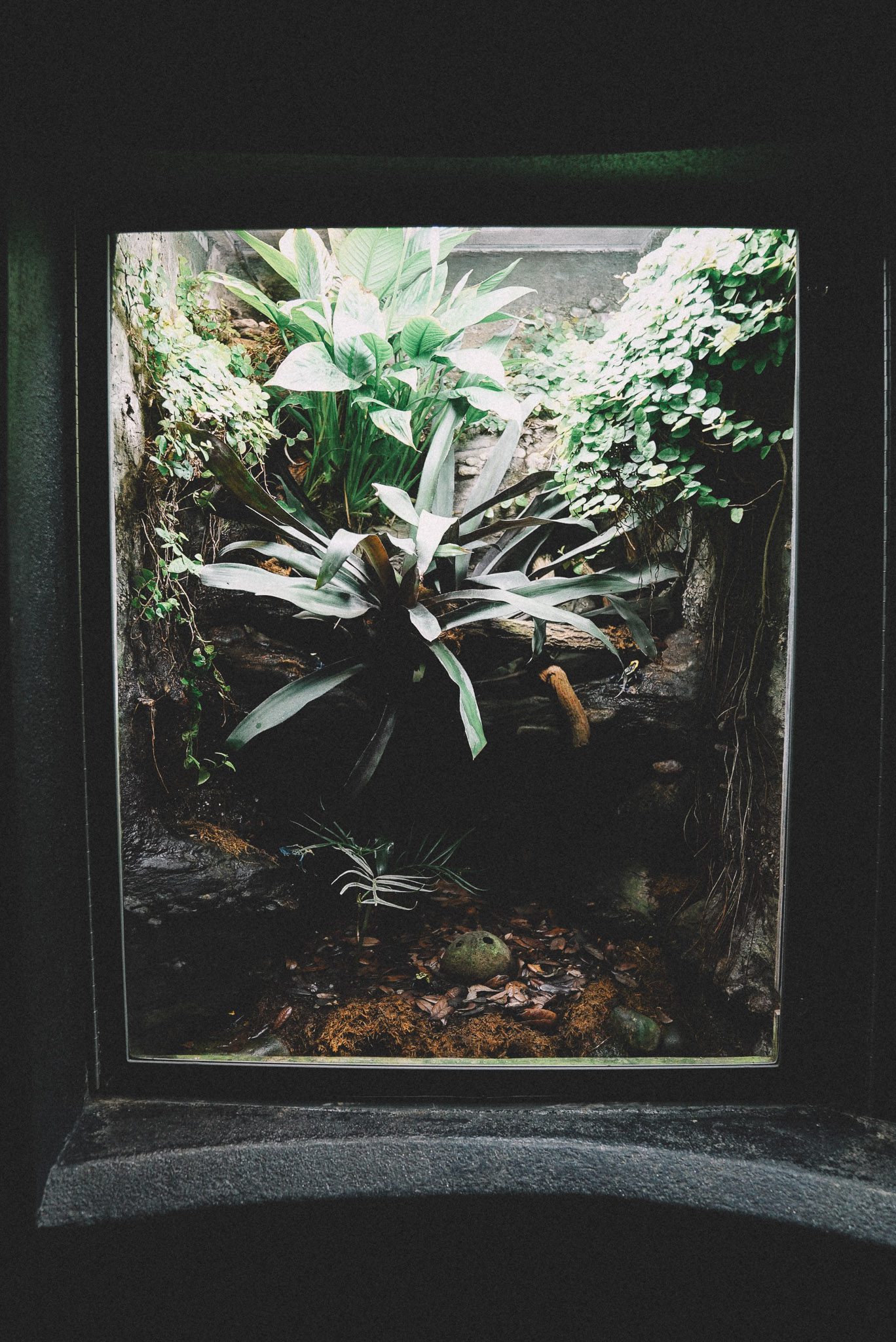
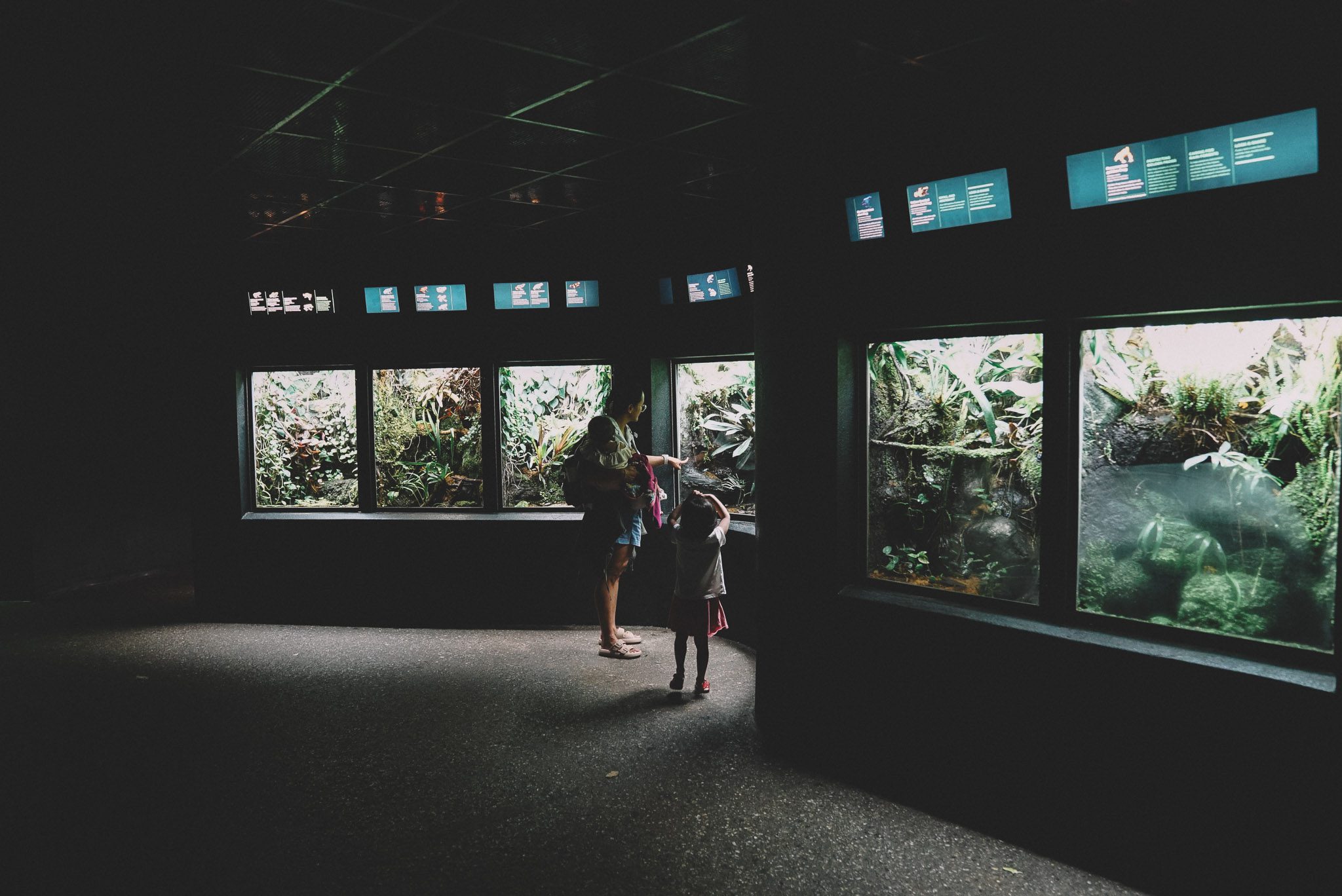
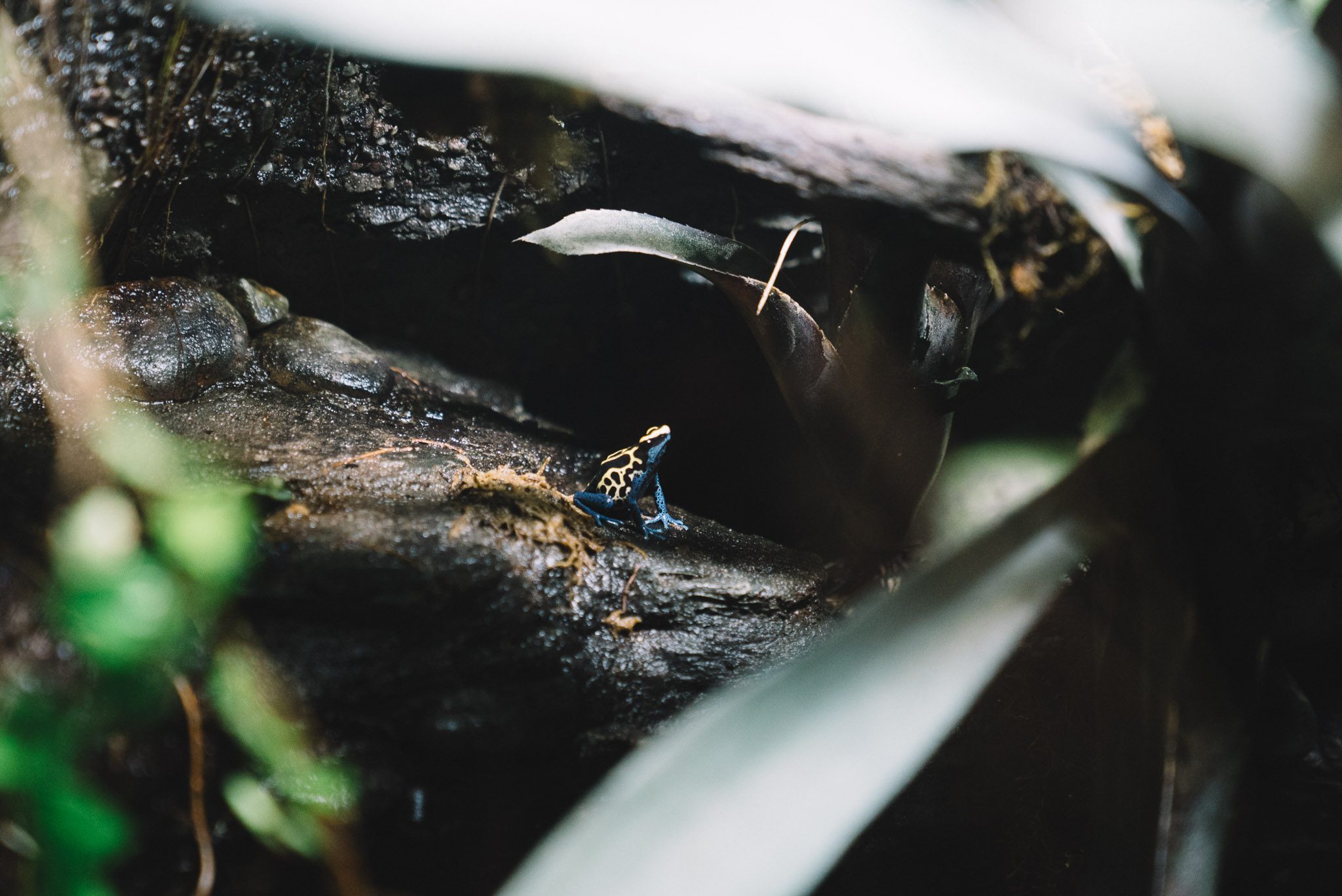
Not everything at the National Aquarium lives underwater. There are also several vivariums and tropical habitats featuring reptiles, amphibians, insects, and other animals. Some of these exhibits are fairly small, but I thought they were very well done.
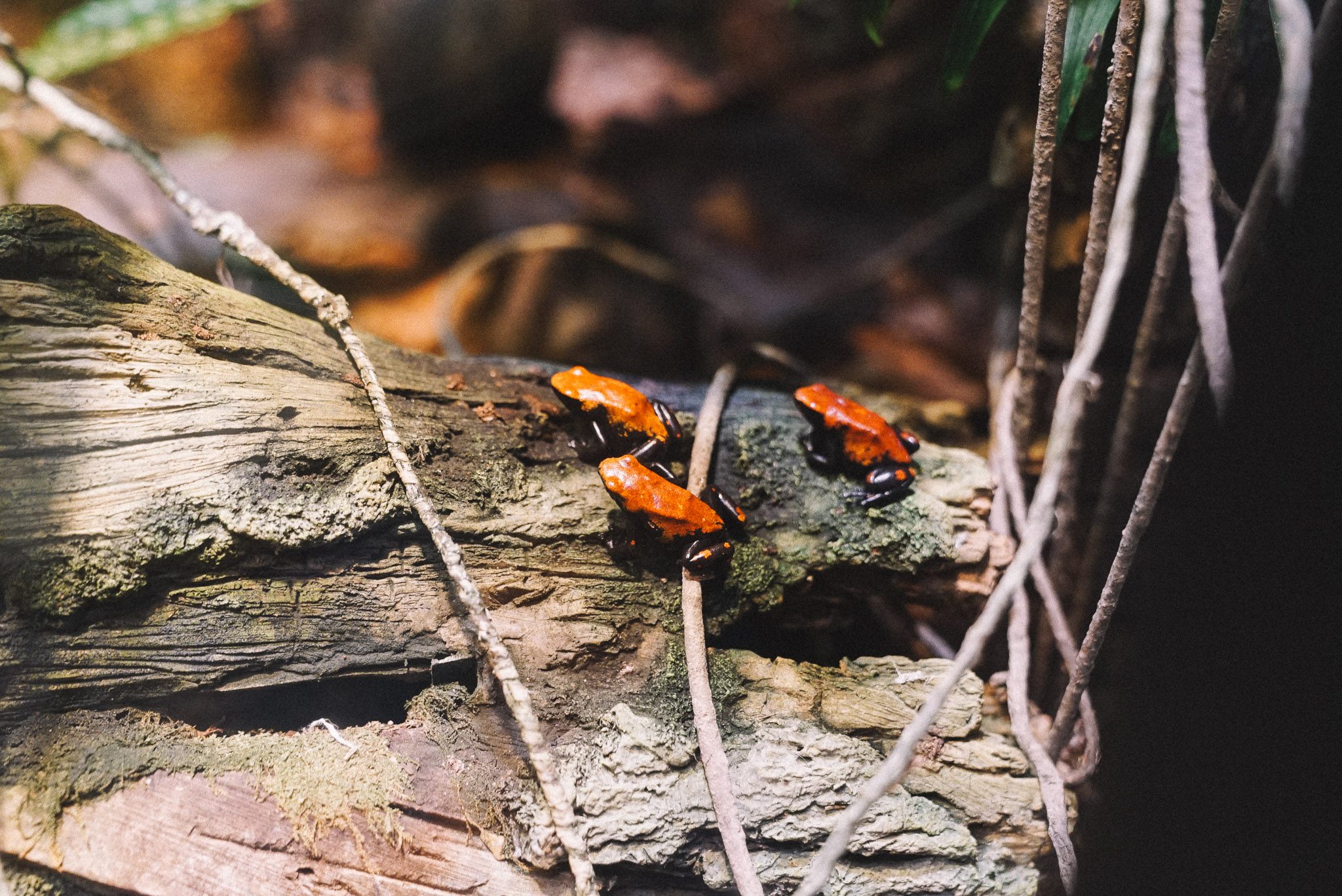
The next set of photos shows some of the animals we encountered, including several colorful frogs. One of my favorites was the tiny blue and yellow poison dart frog. These frogs are native to tropical regions of Central and South America and are known for their bright colors, which serve as a warning to potential predators.
We also saw some bright orange frogs resting on the branches inside their enclosure. It’s amazing how small some of these animals are. You really have to take your time looking through the plants and branches because they’re easy to miss.
The vivariums are designed to resemble the animals’ natural environments, with live plants, branches, and carefully controlled humidity. It was interesting to see how much detail goes into recreating these habitats.
For the kids, this was another opportunity to learn about the differences between amphibians and reptiles, and how these animals have adapted to survive in their environments. It’s also a good reminder that not all the creatures we study in science are large or easy to spot. Some of the most interesting ones are actually pretty tiny.
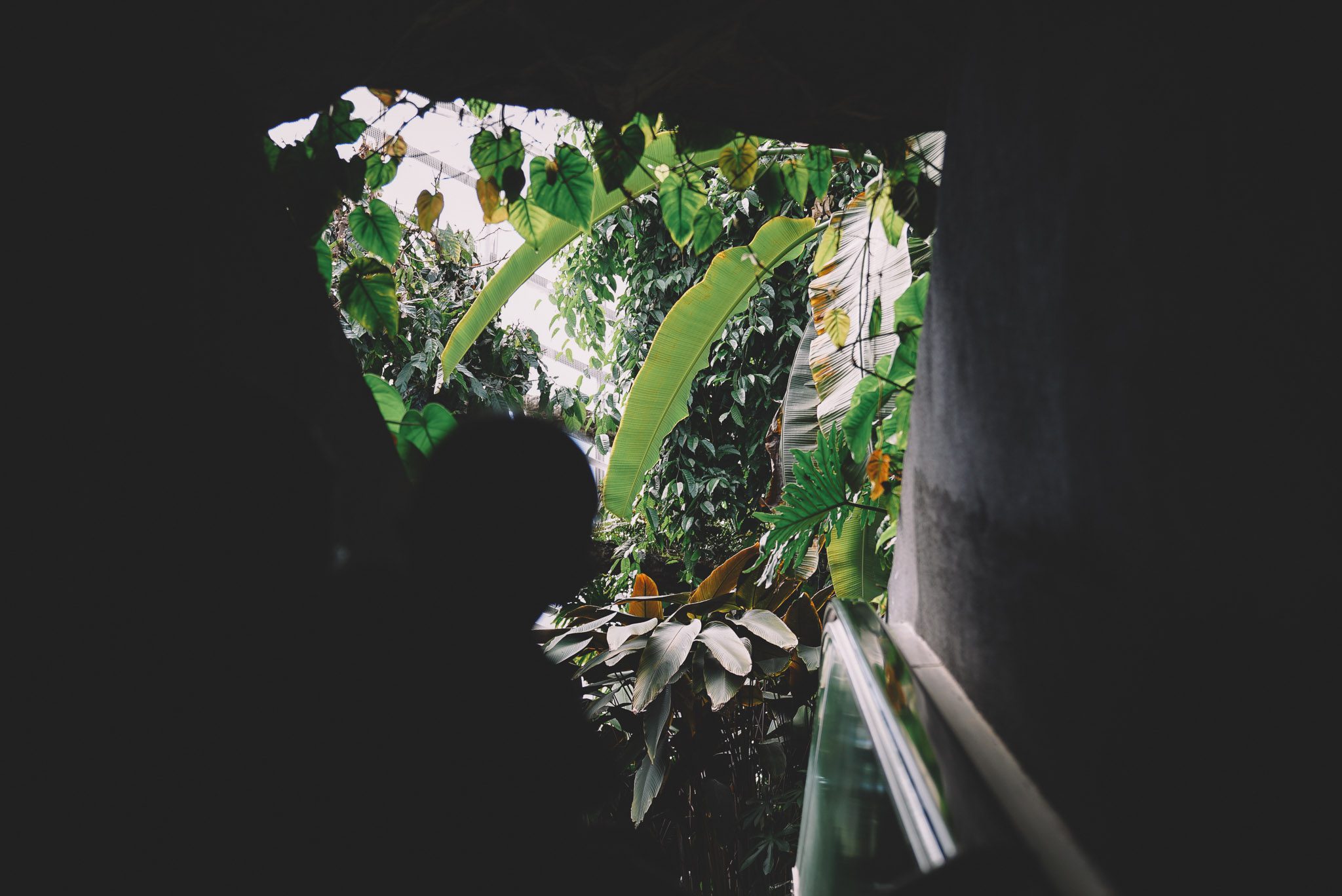
To the Canopy
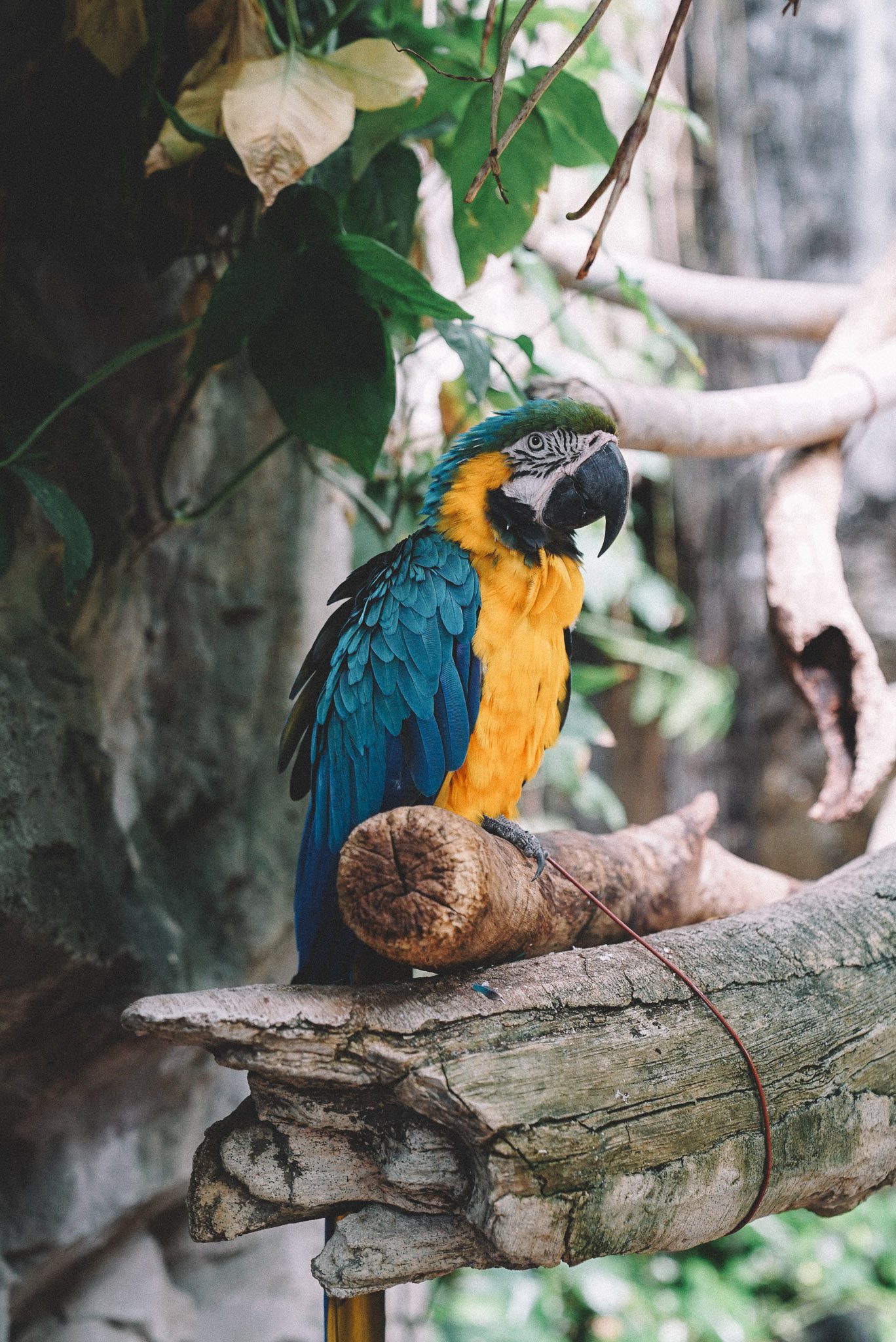
Blue and Yellow Macaw
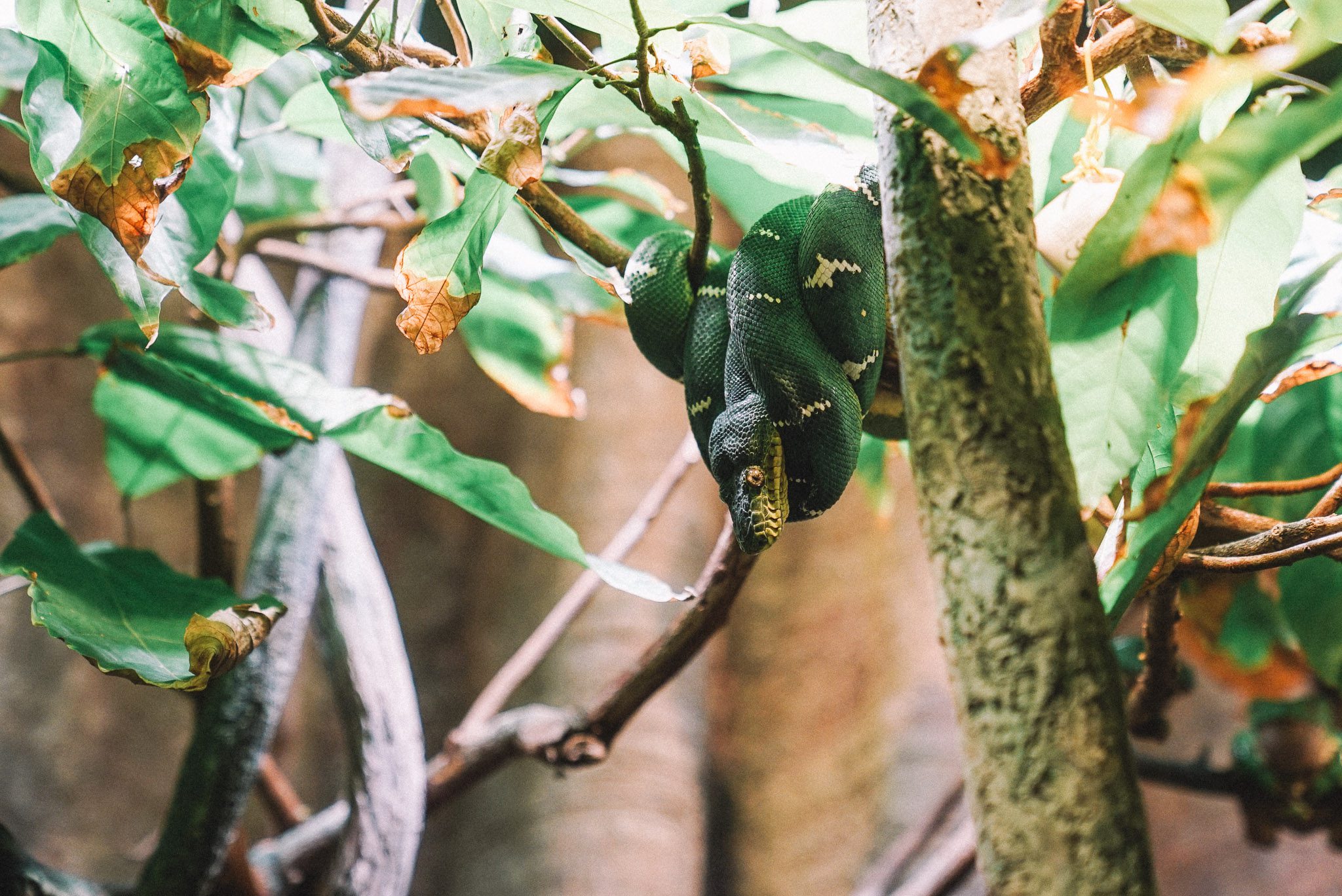
Emerald Tree Boa
Australian Outback
Jellyfish for Days
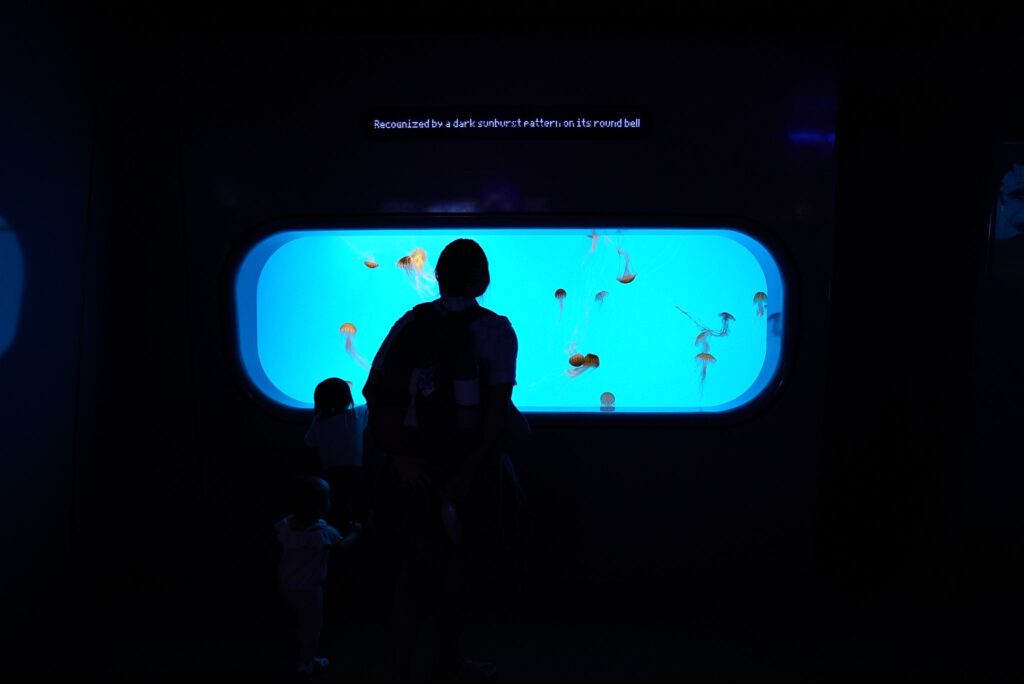
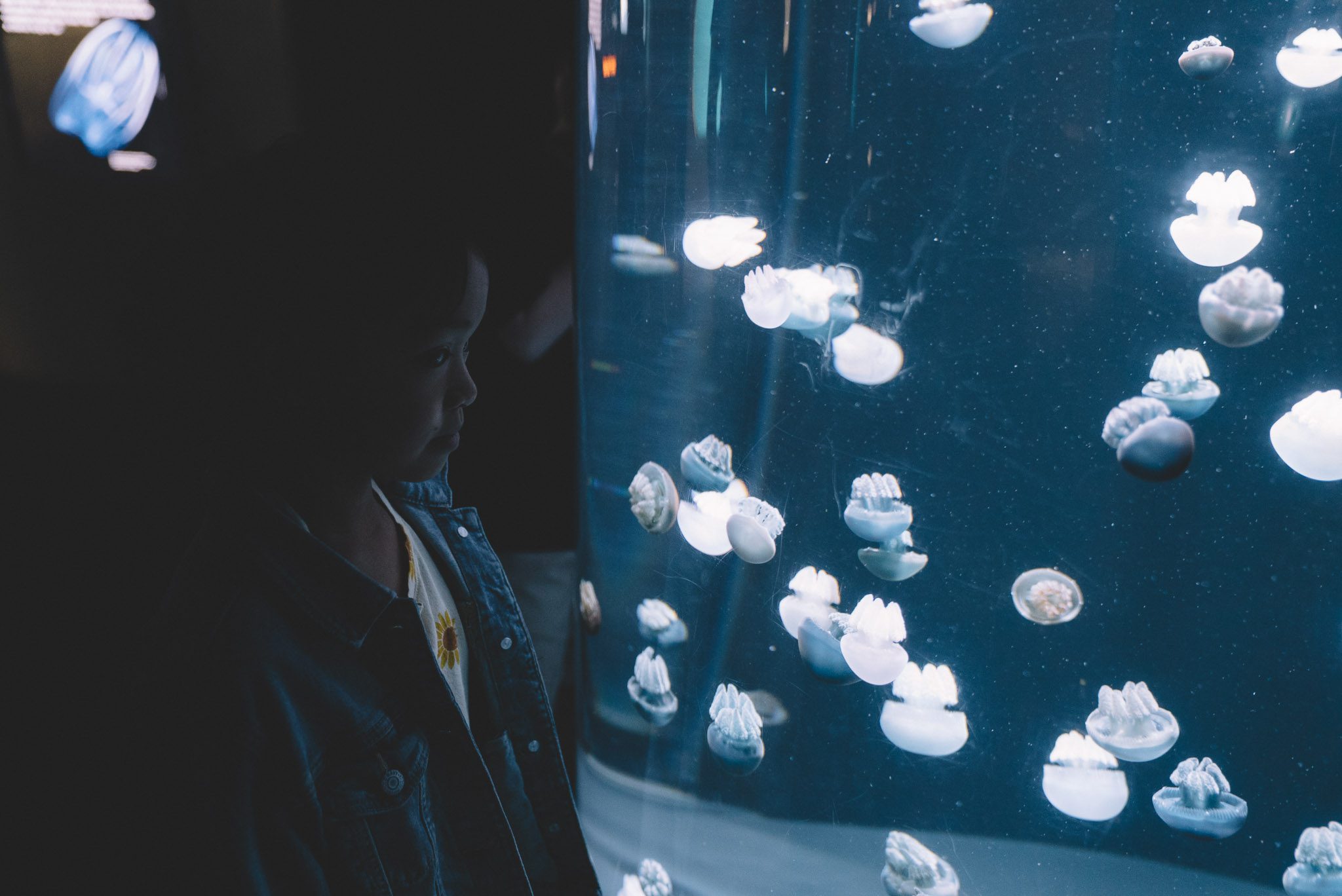
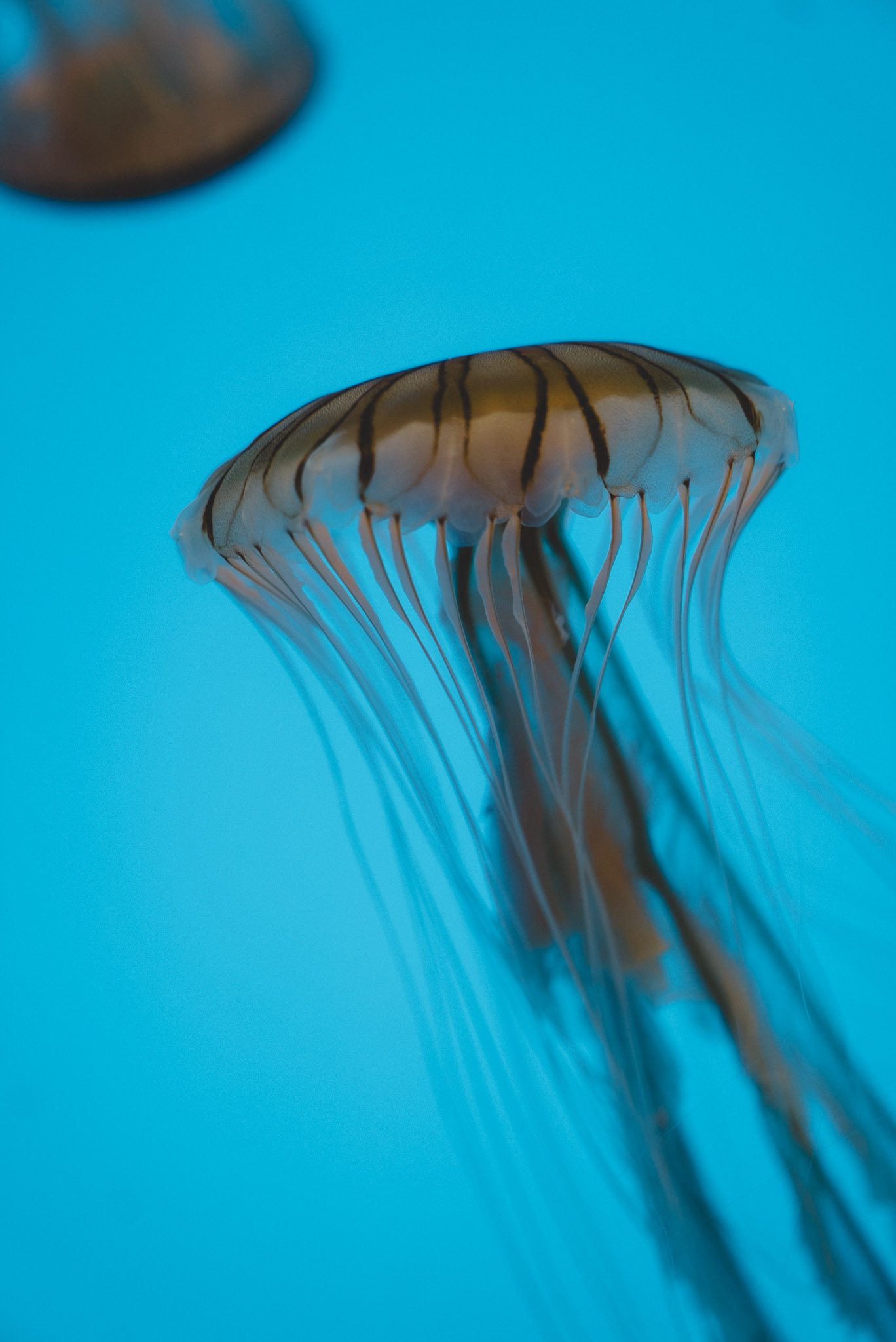
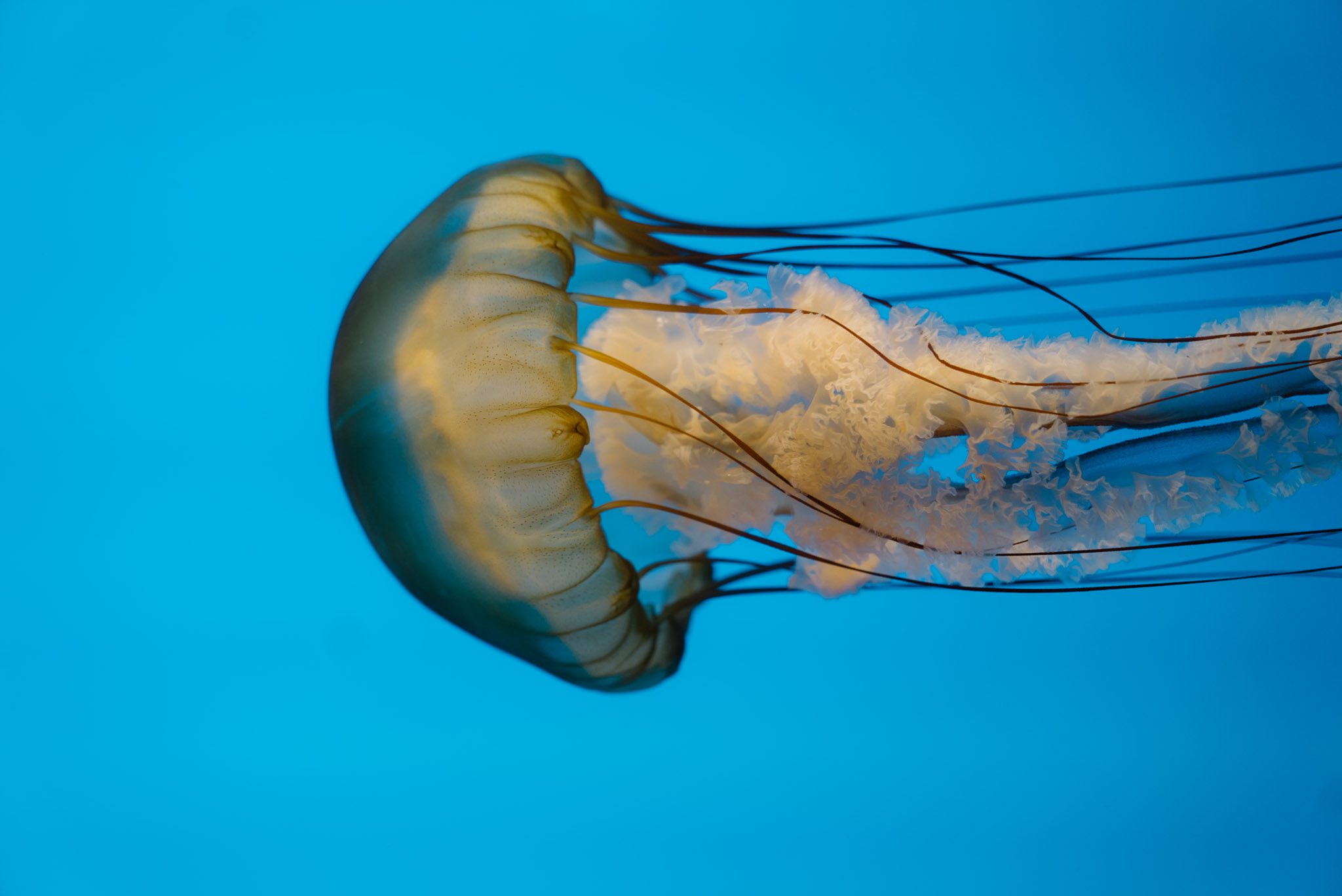
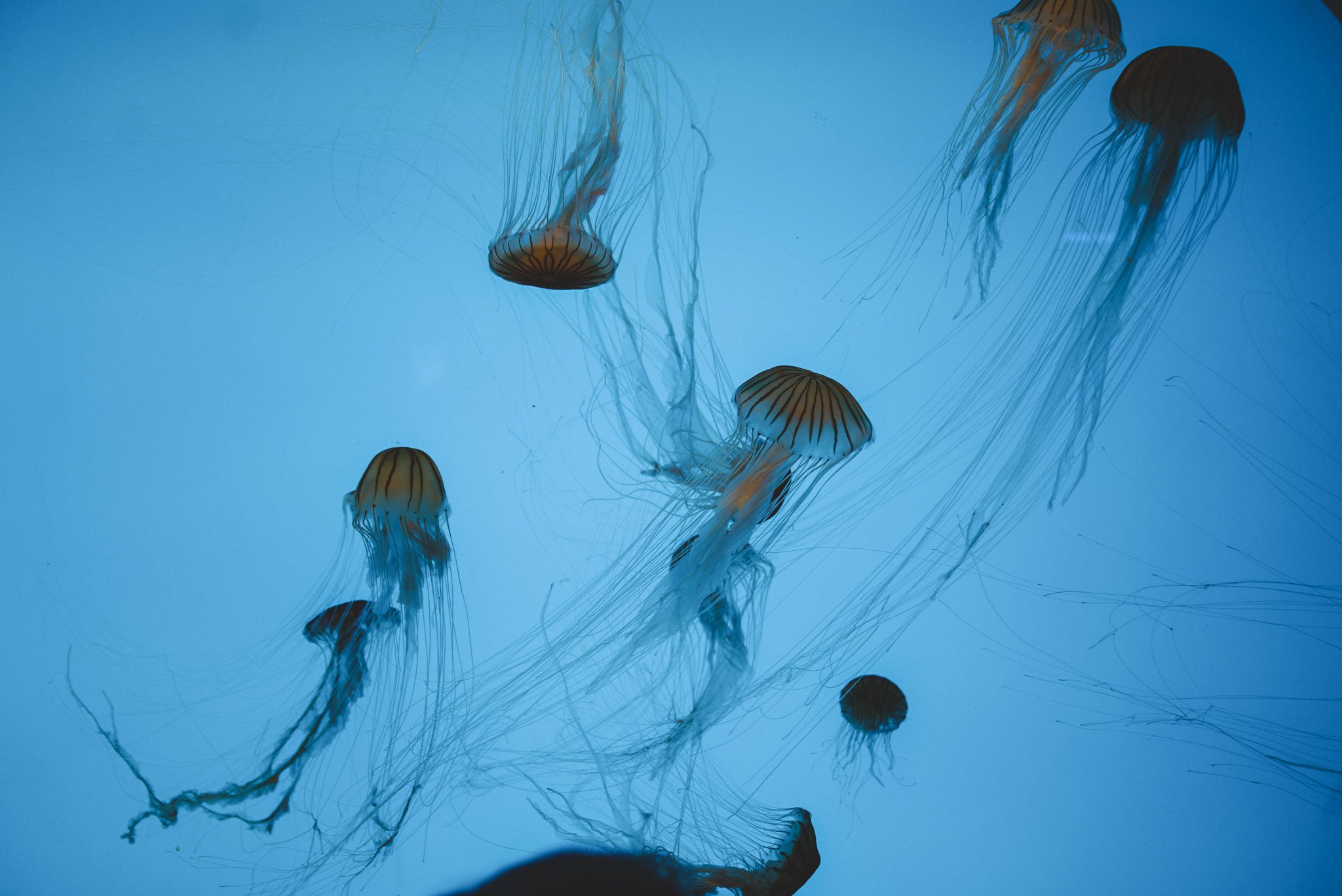
I think one of the more visually interesting exhibits at the aquarium was the jellyfish section. The exhibit is called Jellies Invasion, and it features several different species displayed in illuminated tanks. The lighting really makes the jellyfish stand out, especially against the bright blue backgrounds.
Watching them move through the water was pretty fascinating. Unlike fish, jellyfish don’t have fins or a backbone. Instead, they use contractions of their bell-shaped bodies to help propel themselves through the water while also drifting with the currents.
What’s interesting is that jellyfish have been around for hundreds of millions of years, making them one of the oldest groups of animals still living in our oceans today.
I probably spent more time photographing these creatures than I originally intended. The transparent bodies and long flowing tentacles made for some pretty interesting compositions. It wasn’t the easiest place to photograph because of the dark surroundings, but I really liked how the photos turned out.
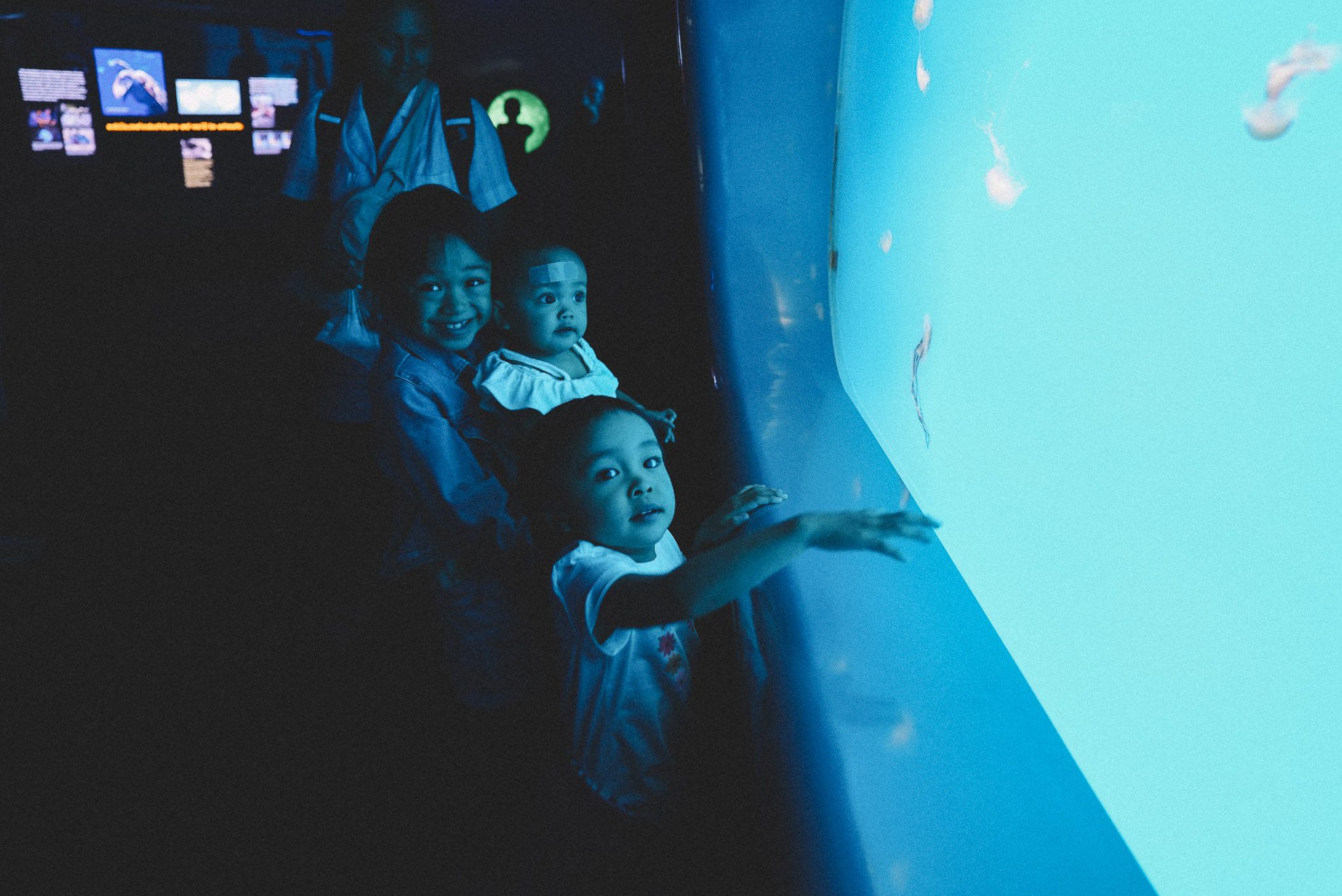
The kids seemed pretty interested in watching the jellyfish float around. Some were small and almost completely transparent, while others had long tentacles that extended well beyond their bodies.
Jellyfish are also an interesting subject for our science curriculum because they’re so different from most other marine animals. They don’t have a brain, heart, or bones, yet they’ve managed to survive in our oceans for an incredibly long time.
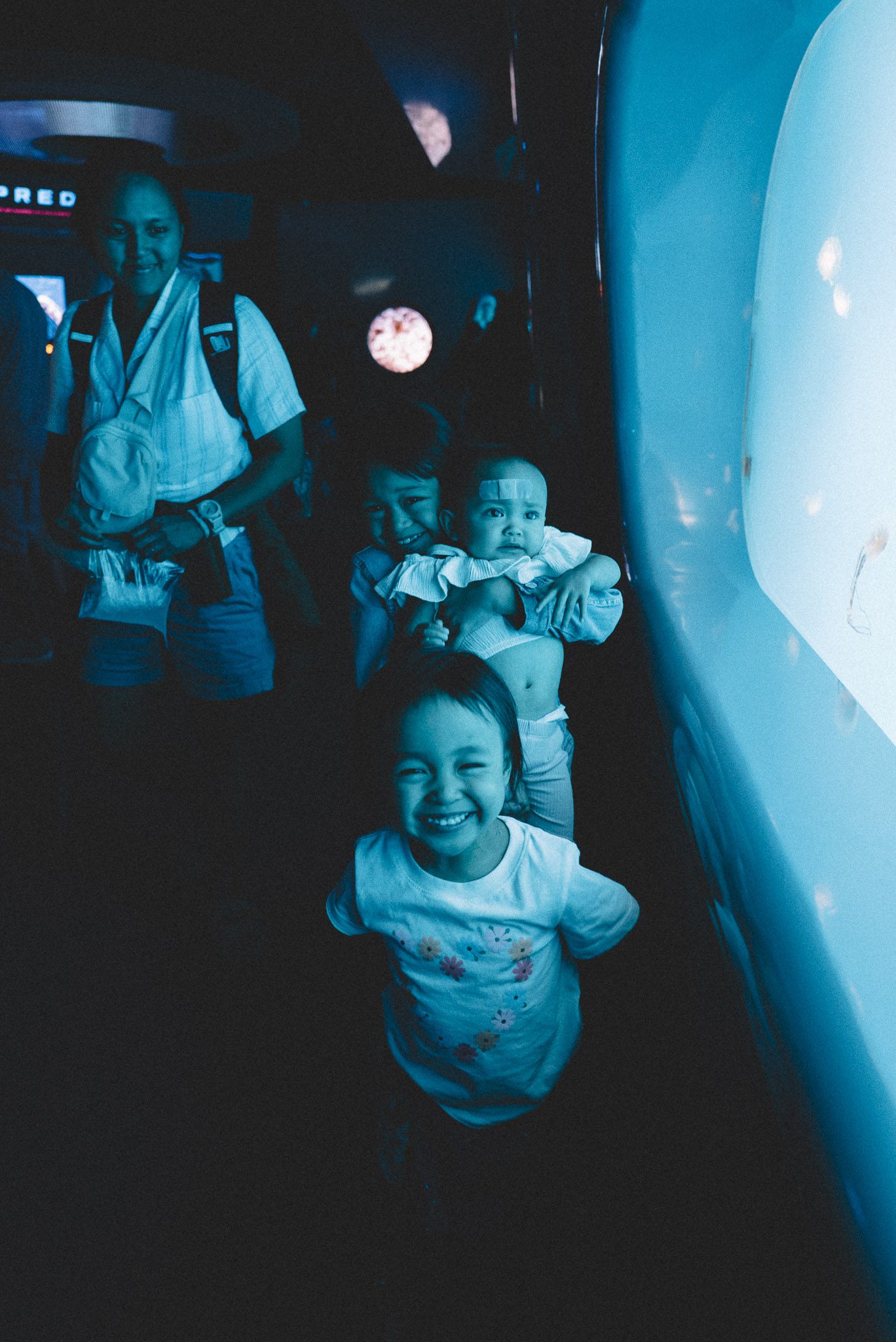
This was definitely one of my favorite sections to photograph, especially with the kids in the frame.
Go with the Flow
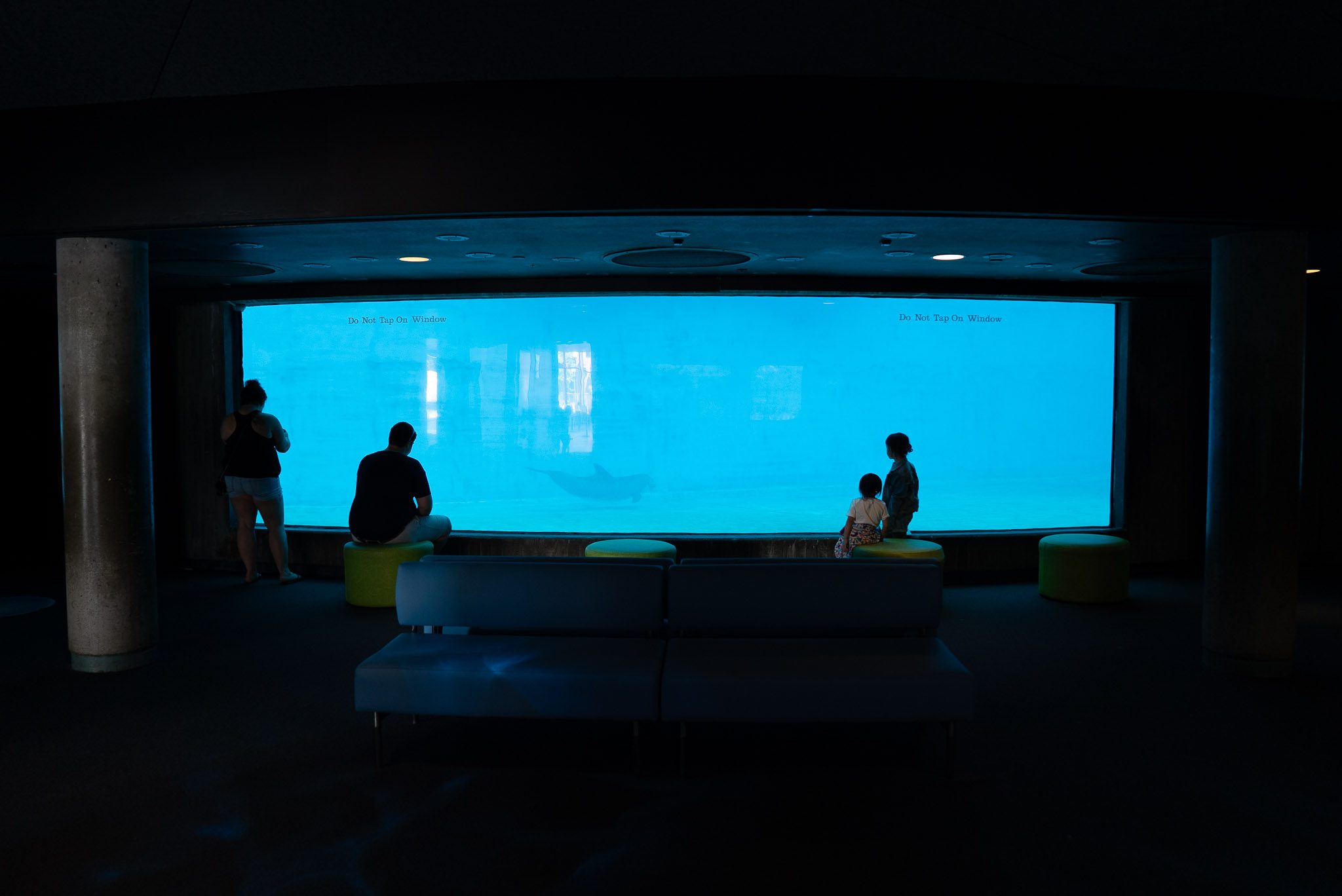
Dolphin Discovery
Another major attraction at the aquarium is the dolphin exhibit, officially called Dolphin Discovery. This section is located in the Pier 4 Pavilion, which opened in December 1990 as the aquarium’s first major expansion. The addition included a large habitat for Atlantic bottlenose dolphins and significantly increased the aquarium’s overall size.
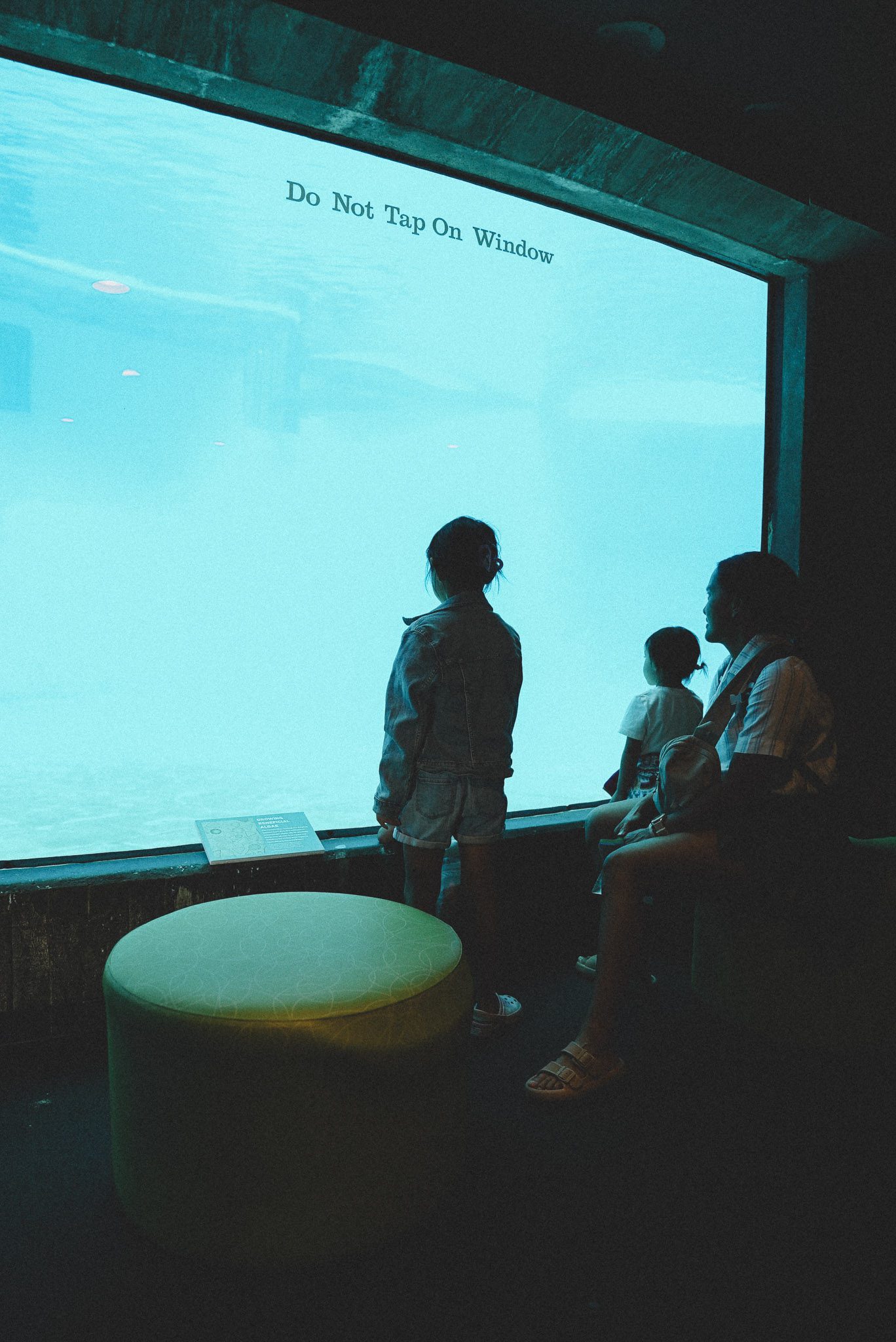
The viewing area has a large underwater window where visitors can sit and observe the dolphins as they swim around. I liked that there was plenty of seating available, making it a good place for families to spend some time watching the animals.
Dolphins are particularly interesting because of their intelligence and social behavior. They communicate through a variety of sounds and use echolocation to navigate and locate objects underwater.
It was another good opportunity for the kids to learn about marine mammals and how they’re different from fish, even though they spend their entire lives in the water.
End of the Tour
By the time we finished exploring the aquarium, we had already spent a good portion of the day walking through the different exhibits. There was definitely a lot to see, and I think we managed to cover most of the major attractions.
Overall, I would consider the National Aquarium in Baltimore one of the better aquariums we’ve visited as a family. I particularly liked the layout of the building and how the exhibits were organized around different ecosystems. The rainforest, shark exhibits, and jellyfish displays were probably some of my favorites.
My wife, however, still considers Ripley’s Aquarium in Toronto her favorite. We’ve been fortunate enough to visit some really nice aquariums over the years, and I can understand why she likes that one so much. But I think Baltimore has its own strengths, especially when it comes to the variety of habitats and the educational aspects of the exhibits.
One of the things we try to incorporate into our family outings is learning. Since we homeschool our children, visiting places like aquariums, museums, and historical landmarks gives us opportunities to take what they’ve learned at home and actually see some of those things in person.
The National Aquarium was a perfect example of that. Not only did we get to enjoy a nice family outing, but we were also able to include it as part of their science education. There were so many opportunities to discuss marine biology, different ecosystems, animal adaptations, and the importance of conservation.
I think this is one of the great benefits of homeschooling. Education doesn’t have to be limited to books or sitting at a table. Sometimes the best lessons happen when we’re out exploring different places together.
Another great family outing and definitely a place we’d recommend visiting if you’re ever in the Baltimore area.




Leave a Reply